
Demand and load forecasts
See how energy use is changing in your area and what that means for future demand.

Managing current and predicting future electricity demand is one of the biggest factors impacting the cost and reliability of our power distribution infrastructure.
'Electricity demand' is the amount of electricity required by households, businesses and industry across our distribution network at any point in time.
More electricity is generally used in the afternoon and evening when we switch on lights, air conditioning, TVs and computers, start cooking, having showers and washing clothes. This activity contributes to a significant spike in residential energy usage and is what we call peak demand.
This typical demand cycle graph shows the extra electricity required to meet peak demands on hot days and the sources of this demand:
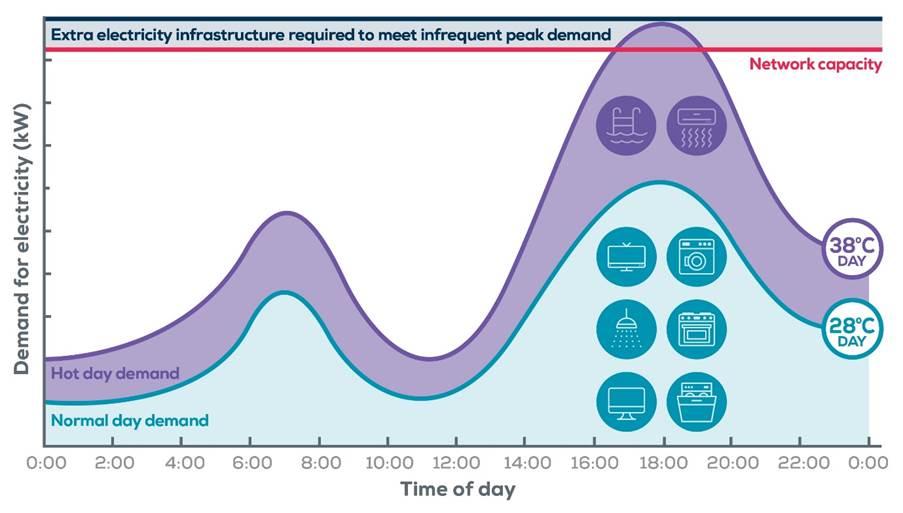
Major spikes in the demand for electricity occur during heat waves and cold snaps, when we turn on appliances to cool or warm our homes.
This only happens on a few days of each year, on particularly hot afternoons when thousands of households use their air conditioners and on very cold days when we turn on heaters to warm our homes.
The problem with peak demand
It’s our responsibility to deliver electricity safely, reliably and efficiently to our customers. Our network is built to avoid power outages including on the extremely hot and cold days when there are major spikes in demand.
We manage the investment of extra infrastructure very carefully to handle in extra infrastructure to handle these major spikes, which only occur on a few days a year.
In fact, 16% of our network capacity is used for a small number of hours, on a few very hot and very cold days each year. By changing how our customers use electricity we can reduce the investment need to grow the network, putting downward pressure on prices for our customers.

As more customers feed affordable solar energy into the grid during the middle of the day, national rules now require tariffs to better reflect how the network is used. This helps to ensuring a fairer, more efficient system for everyone.
To support this shift, we’ve introduced time-of-use tariffs for retailers, replacing the single flat rate. As a result, midday charges are now at their lowest ever.

Before you build or expand your operation, it’s important to know if the network in your area can support your plans. For big projects such as data centres, new residential precincts, industrial zones or shopping centres, this data will help you make informed decisions from the start.
Grid capacity is the amount of electricity the local network can safely deliver, especially during busy times.
We’re constantly growing our network, however, if the network is already near full load, you may need to reconsider your project or its location or timing. Knowing this up front helps you avoid surprises.
Here’s a simple guide to help you use Endeavour Energy’s online tools to understand if the network can support your project.
Find links to related resources that can help support your planning, connection or backup power needs.
See how energy use is changing in your area and what that means for future demand.
Find out how we’re using the latest technology to help make communities more self-sufficient for power.
This report sets out the Distribution Loss Factors for Endeavour Energy’s electrical distribution network for the 2025/26 financial year, as required under the National Electricity Rules. These calculations follow the methodology outlined in Endeavour Energy’s Methodology Report Determination of Distribution Loss Factors.

